
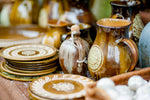
Buying second-hand tableware isn't just appealing. Beyond the purely aesthetic appeal of vintage pieces and generally more affordable prices, buying second-hand also supports more sustainable consumption with objects designed to last . We treat ourselves and we help our planet – what a dream!
 To avoid being disappointed by our purchases, we have reviewed some tips for buying smart and avoiding unpleasant surprises when we get home.
Check the condition of the dishes
"Yes, thank you, champ, and water is wet too." Obviously, with this advice, we're stating the obvious, you might say... But still, we think it's important to remind people!
Sometimes, in the euphoria of the moment, with the world around us or with the joy of having found a little gem, we are less vigilant. Then, once home, the nugget that seemed so perfect is ultimately just a sad stone full of chips or cracks.
It's not a disaster if there are small chips, it's true. However, care must be taken to ensure that this does n't compromise the object's durability, depending on its material!
So in the store , we're not afraid. We're meticulous , we look for a well-lit spot and we run our finger along the edges of the object to find any defects.

Know the brand and its value
You don't need to become as knowledgeable as the specialists at Purvintage, but it's never a bad thing to have a little information about certain well-known brands. That way you have an idea of whether the price of an item is exorbitant, or on the contrary, if it's a super affordable treasure.
Even in-store before buying, don't hesitate to do a quick online search to learn more. Certain brands like Digoin, Sarreguemines, Villeroy & Boch, or Limoges are very popular.
If we have one tip for you, follow our social media and blog articles! We frequently share little secrets, stories, and tutorials to help you better understand vintage brands and objects .
Knowing the usage: daily or occasional?
Sometimes old dishes, plates or cups are n't always suitable for our kitchens . And by that, I mainly mean two appliances that have appeared in our daily lives and are incredibly practical : the dishwasher and the microwave oven.
It's important to know the dishwasher and microwave compatibility of the items you buy to guide your choices. For example, gold-plated porcelain pieces are neither dishwasher nor microwave safe!
What matters, then, is how you intend to use it: while gold-plated porcelain tableware is best suited for occasional use, special events, and hand washing, other brands like Arcopal are perfect for everyday use. With its particularly durable opaline glass, it's perfectly dishwasher-safe.
In conclusion
Second-hand tableware is both a way to make your table sublime with beautiful vintage objects that have a history, but also a strong eco-responsible gesture.
So, let's enjoy discovering great finds while remaining vigilant about their condition, brand, and intended use. This will prevent unpleasant surprises and later regrets about the purchase.